
South Downs National Park Authority makes commitment to climate action
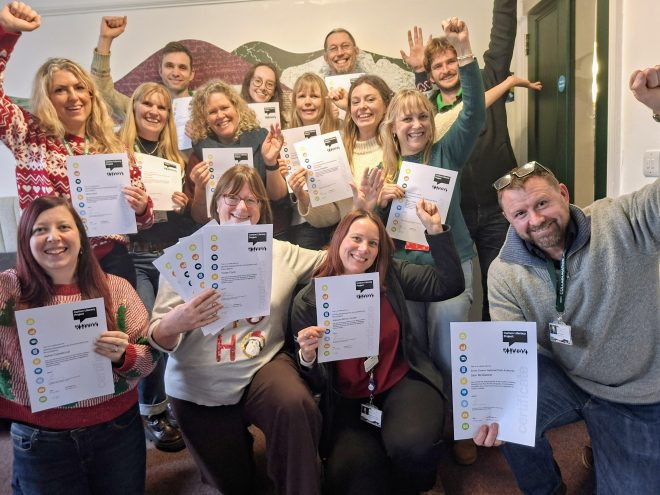
The simple things we can all do to help tackle climate change and reduce carbon emissions have been the focus of an innovative training programme at the South Downs National Park.
Staff from across the National Park Authority have been taking part in training to understand the causes and impacts of climate change. It comes as businesses, organisations and schools across the region are becoming “carbon literate” by undertaking accredited training through the Carbon Literacy Project.
The training aims to help people understand how reducing carbon emissions can lead to cleaner air, soils and water, more biodiversity, improve human health and provide greater resilience to extreme weather.
More than 60 staff have completed the training at the South Downs National Park Authority, with many more signed up.
The National Park Authority is the first National Park in the UK to achieve Silver Carbon Literacy Organisation (CLO) status.
It comes as the National Park recently launched its Partnership Management Plan – outlining shared priorities with partners for the next five years – and climate change was one of the key actions.
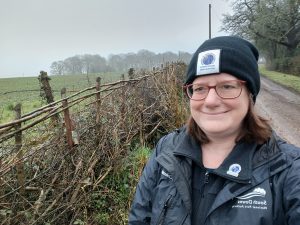 Sara Osman, Climate Change Officer for the National Park, said: “This has been such a worthwhile initiative and it has motivated real behaviour change both at home and at work. It’s been lovely to see people receive their certificates.
“Taking positive climate action is now a core part of our work, as well as in many other organisations from a variety of sectors. While many of our staff had good awareness of climate change, we wanted to ensure there was a stronger knowledge base to help increase confidence when talking to the public and partners we work with.
“The training has created a buzz that will drive the climate action that is emerging as part of our new commitment in the Partnership Management Plan.”
Simple things learned on the course as examples of how to reduce your carbon footprint include:
- Lift share with your colleagues, friends and family
- Lower the thermostat: Reduce your heating by 1C
- Turn off TVs, computers, and chargers when not in use to stop “vampire” energy drain
- Walk or cycle when you are able to instead of driving
- Dry clothes naturally on a washing liner, rather than a tumble dryer
- Incorporate some plant-based meals into your diet
- Shop locally
- Explore options for solar and heat pumps through grant schemes.
- Take shorter showers
- Growing more of your own food
After completing the literacy training, staff had to pledge two actions to reduce carbon emissions. So far 40 staff have completed their pledges, and their combined actions will reduce emissions of carbon dioxide by 23.5 tonnes. This is the equivalent to heating a typical home by gas for 1,565 days (over four years) or washing or drying 9,783 loads of laundry.
The staff training was funded by Defra as part of its Carbon Literacy Project. Other organisations that have undertaken carbon literacy training are local authorities across the National Park including West Sussex County Council, Horsham District Council, and Winchester City Council, as well as organisations such as Rolls Royce and National Highways.
In March 2020, the South Downs National Park Authority adopted a Climate Change Strategy and Action Plan, with a goal of becoming a ‘Net-Zero’ organisation by 2030 and work towards the South Downs National Park becoming ‘Net-Zero with Nature’ by 2040.
To find out more about the National Park’s commitment to climate action, see the new Partnership Management Plan at www.southdowns.gov.uk/national-park-authority/our-work/partnership-management It includes goals such as increasing tree canopy and woodland cover by 4,200 football pitches (2,625 hectares) by 2031 to help store carbon, soak up water and create vital new havens for wildlife. A key part of the National Park’s climate work continues to be working with local climate action groups in towns and villages to help deliver community-based climate action.
For information about the Carbon Literacy Project visit https://carbonliteracy.com/