
Big ambitions unveiled for South Downs National Park and beyond in major strategy
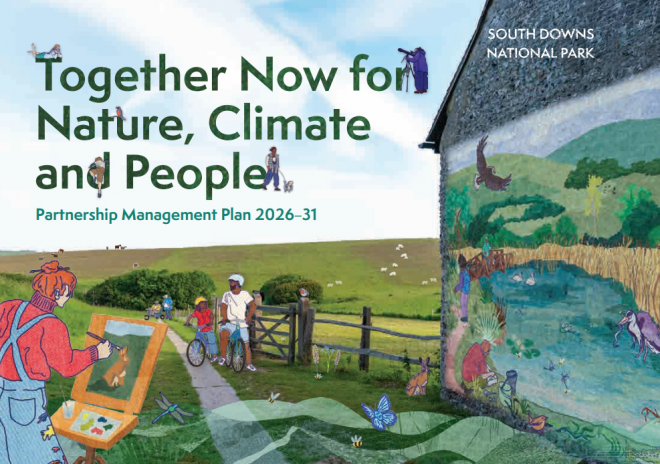
A five-year masterplan has been unveiled today to build the critical natural infrastructure we need to tackle the challenges we all face of nature loss, pollution in our rivers, flooding, water shortages, and the ever-increasing risk of wildfires.
The ambitious plan for the South Downs National Park includes helping more young people take action for nature, being a more welcoming and accessible space for all, and protecting and improving our precious dark skies.
It comes as a government assessment on national security, released last week, concluded that continued biodiversity loss and ecosystem collapse pose serious risks for food security, energy, water supplies, and geopolitical stability.

Working alongside a range of fantastic partners, including farmers, environmental organisations, communities and businesses, the National Park Authority has adopted its Partnership Management Plan – the most important document for any National Park. The strategy lays out what the Authority and its partners want to deliver over the next five years.
The plan is the next step towards the National Park’s vision for 2060 – a thriving, buzzing nature-rich South Downs. It has been developed over 18 months and comes after several rounds of consultation and engagement across the region.
A range of ambitious targets have been agreed, including increasing tree canopy and woodland cover by 4,200 football pitches (2,625 hectares) by 2031 to help store carbon, soak up water and create vital new havens for wildlife.
A goal of restoring or creating more than 3,300 hectares of wildlife-rich habitats by 2031 has been agreed – an area the size of Worthing or Hayling Island. These new havens are outside current protected nature sites and will help significantly boost regional biodiversity in the long-term and increase resilience to higher temperatures and flooding.
Together with the extra woodland cover, new wildlife havens and other measures, the National Park will be able to absorb more greenhouse gases from the atmosphere and help to tackle climate change.
Meanwhile, a key goal is that all waterbodies in the National Park achieve “high” or “good” status by the end of 2027. It comes after a major study last year showed that most bodies of water are failing to meet good ecological standards.
The Plan also commits to engaging with 2,500 schools, inside and outside the National Park, and delivering 500 nature-based activity sessions for young people. It comes as the Government’s recent climate change and mental health report highlights that young people are especially vulnerable to the mental health impacts of climate change and NHS statistics show record rates of anxiety in children.
The plan is for the whole National Park and can only be delivered in partnership with farmers, landowners, local authorities, the health sector, water companies, businesses, schools, charities and communities.
 Siôn McGeever, Chief Executive of the National Park Authority, said: “This new partnership plan is hugely ambitious – and rightly so because our wonderful National Park deserves nothing less.
“National Parks have the answers to so many of the challenges facing our society today, including biodiversity loss, flooding, wildfires, water shortages, and rising mental health issues. We can build this natural, green infrastructure by planting more trees, improving our soils, transforming waterways, increasing food security and providing that access to nature that so many people need for their wellbeing.
“This plan asks us all come to together and step up what we can collectively achieve to bring about real and lasting change across the South East so that we can create a better future.
“The South Downs National Park was designated for us all and it will take us all to achieve the aims in this plan. This is an outward-looking plan, so it’s very much about what we can achieve together at a regional and national level.
“As a human race we’re facing the biggest challenges of our time and National Parks have a key role to play – as hubs for nature recovery and climate action and, perhaps most importantly, places of hope.”
 Vanessa Rowlands, Chair of the South Downs National Park Authority, said: “I’d like to thank each and every person who has contributed to this plan, including members of the public and the many partners who have got behind it.
“It’s a collective effort and we must build on what is working, acknowledge what isn’t, innovate, try new things, create new partnerships, and challenge ourselves. This plan is a powerful call to action and everyone can play their part in creating a brighter future.
“Young people are the future custodians of this amazing place, so I’m really pleased that we’re putting a big emphasis on engagement with them.”
The Partnership Management Plan sets out seven collective priorities between 2026 and 2031 – nature recovery, climate action, clean water, young people, welcome and access, arts and heritage and a thriving, greener place.
Among the other key targets include:
- A total of 300 new affordable homes are completed by 2031 – with planning permission for a further 500.
- Expand the current dark sky core (the very darkest areas) of the International Dark Sky Reserve by 10 per cent by 2031 by working with lighting authorities and local communities.
- Ensuring at least 65 to 80 per cent of land managers adopt nature-friendly farming on at least 10% to 15% of their land. Also in agriculture, the aim is to implement regenerative farming practices across 8,000 hectares of the National Park by 2031. This is a form of agriculture that focuses on improving soil health, biodiversity and the water cycle.
- Bring 80 per cent of Sites of Scientific Interest (SSSIs) in the National Park into favourable condition by 2042 – with a goal of 50 per cent by 2031.
- Improve sustainable access across the South Downs National Park by expanding public transport services to key visitor hubs and gateway towns.
- Some 200 Scheduled Monuments in the National Park to have enhanced or updated condition records on the National Heritage List for England.
Read the full Partnership Management Plan (2026-2031) here.
Strong support from partner organisations across region
A wide range of partners have given their backing to the plan.
Dan Ross, Environment Strategy Manager at Southern Water, said: “We were delighted to support the development of the South Downs National Park Partnership Management Plan over the past few months, and to collaborate on aligning strategic shared objectives. The plan has bold ambition across a wide range of issues that affect us all in particular around nature, climate and people. Delivery will be a shared endeavour and will rely on broad participation of partners across all sectors. We particularly welcome a strong focus within the plan on water management and the role of catchment-based solutions.”
Bob Taylor, Chief Executive Officer of Portsmouth Water, said: “We’re incredibly supportive of the Partnership Management Plan and were very pleased to contribute to its development. The South Downs National Park is home to many of our precious chalk water sources, including world-renowned chalk streams and rivers.
“Supporting these special ecosystems is vital both for nature and for ensuring we all have reliable, high-quality water, now and in the future. We already work closely with farmers and landowners to raise awareness of how land management can affect the environment, helping to improve farming practices through better soil health and targeted funding. Portsmouth Water also supports biodiversity within the South Downs and has funded the restoration of five ponds through the National Park’s ‘Pounds for Ponds’ initiative.
“We’re looking forward to continuing to work closely with the South Downs National Park Authority as they deliver this plan.”
Debbie Tann MBE, Chief Executive of Hampshire & Isle of Wight Wildlife Trust, said:
“I love the ambition of the South Downs Partnership Management Plan. At a time when nature, climate, young people and communities are under severe pressure, this plan offers a vision of hope and a solid set of actions to tackle these challenges. From restoring wildlife-rich habitats and chalk streams to tackling climate change and improving access to nature for young people, it recognises that success relies on a broad range of partnerships working together. At the Trust, we are proud to be part of the collective effort to help nature recover across the South Downs and beyond, creating a more resilient landscape that benefits wildlife, communities and future generations.”
Tim Bamford, Regional Director for CLA South East, said: “Farmers and landowners across the South Downs National Park are producing food and looking after the environment, and working together is key to supporting them and the rural economy.
“We look forward to continuing to engage with the park and all stakeholders to help ensure the South Downs is a vibrant place to live, work and visit.”
Councillor Claire Dowling, East Sussex County Council Lead Member for environment, said: “In East Sussex, we are fortunate to be surrounded by some of the most stunning and environmentally important landscapes, and we are acutely aware of the devastating impact that pollution, flooding, water shortages, and wildfires can have.
“We are therefore delighted to be playing our part in the ambitious plan to protect and enhance the South Downs National Park. We have worked closely with the National Park Authority in developing this plan and will continue to do so to ensure the Plan aligns and helps to deliver the forthcoming Local Nature Recovery Strategy for East Sussex and Brighton & Hove. In this way, we can help nature recover to deliver benefits for woodland, wildlife, and nature for generations to come.”
Councillor Deborah Urquhart, West Sussex County Council Cabinet Member for Environment and Climate Change, said: “West Sussex County Council is fully supportive of the new Partnership Management Plan’s objectives in protecting and promoting the South Downs National Park. The plan will help to address key issues that the area faces around tackling environmental challenges and delivering the infrastructure needed to do so. We look forward to working closely with the South Downs National Park Authority and other partner organisations to support delivery of the objectives.”
Leader of Hampshire County Council, Councillor Nick Adams-King, said: “We look forward to working with the South Downs National Park to support the Partnership Management Plan. Collaborations such as this help advance the ambitions of the Local Nature Recovery Strategy for Hampshire and highlight how we all have a part to play in protecting and enhancing Hampshire’s rich and diverse natural environment.”
Councillor Alan Robins, Cabinet Member for Sports and Recreation at Brighton and Hove City Council, said: “This plan captures what people across our region care about: looking after the places that matter to us and making sure they thrive long into the future. The South Downs is a landscape we’re all connected to, whether we live, work or spend time here, and this approach shows what’s possible when partners pull together. I’m pleased to support a plan that’s hopeful and focused on making a difference for both nature and our communities.”
Councillor Andy Harvey, Adur’s cabinet member for the environment and leisure, said: “It’s very encouraging that this plan recognises that farmers, communities, conservation groups and businesses all have a role to play in protecting and enhancing the much-loved national park. I’d like to thank everyone that’s helped shape the masterplan and look forward to seeing its implementation over the coming years.”
Councillor Vicki Wells, Worthing’s cabinet member for environmental services and member of the South Downs National Park Authority, said: “This fantastic new partnership management plan reflects the huge amount of work and engagement with communities. I’m particularly delighted with the strong emphasis on improving water quality and accessibility and wellbeing via the parks International Dark Sky Reserve – which also celebrates its 10th anniversary this year. Engaging with nature has never been more important and this brilliant new plan boldly seeks to connect more communities with the landscape, helping to protect the South Downs for the future.”
Jane Cecil, National Trust General Manager for the South Downs, said: “Nature enriches our everyday lives. It gives us joy and respite, inspires a sense of belonging, and connects us to one another. We’re proud to play our part in the South Downs Partnership Management Plan. Restoring nature is essential to the future of this vibrant landscape, it will require a monumental effort, and one that we can’t make alone.”
Simon Deacon, who helps to lead the Meon Valley Partnership in Hampshire, said: “The River Meon is one of England’s rare and internationally significant chalk streams, valued for its ecological, cultural and landscape importance. The Meon Valley Partnership was established in 2008 and comprises many organisations to support their 5-year Partnership Strategy (2023 – 2028). The partnership was established to facilitate a more strategic, co-ordinated, and effective approach to the conversation and management of the Meon Valley. The SDNP have previously hosted the partnership and is now chaired by Portsmouth Water. The strategy fosters close relationships with the East Hampshire Catchment Partnership (EHCP) and aims to work on a landscape-scale, supporting ecosystem services, deliver positive, practical action on the ground through voluntary groups and working with other stakeholders to deliver catchment improvements. Achievements have included Improving water quality, tackle Invasive non-native species, habitat restoration, community engagement and raising awareness of chalk streams. We’re incredibly supportive of the Partnership Management Plan and will continue to work closely with South Downs National Park on its development and help to contribute towards its objectives.”
Tom Foxall, Regional Director, London & South East for Historic England, said: “Historic England is pleased to have contributed to the preparation of the South Downs National Park Authority’s new Partnership Management Plan. The South Downs are a magnificent landscape with built heritage often closely connected to its natural qualities. We are proud to have partnered with SDNPA on some ground-breaking projects to improve care and appreciation of archaeology and historic buildings in the National Park and we continue to support their particular commitment to keeping cultural heritage at the core of their work to conserve and share its special qualities with the public.”
Oliver Hancock, Chief Earth Officer at Westerlands, a large estate in the National Park, said: “The South Downs National Park is more than a landscape – it is a living system of nature, culture and community. Its future depends on bold, ambitious, collaborative action and that’s why I’m happy to endorse this Partnership Management Plan. At Westerlands, our own strategy and 20-year vision align closely with these long-term objectives of the SDNP-restoring biodiversity, tackling climate change alongside mental health issues and reconnecting people with nature – all with an emphasis on engaging young people in a myriad different ways.”
Greg Ford, Chair of Trustees for Petersfield Climate Action Network, said: “PeCAN welcomes the new PMP and especially the aim to help people and businesses in the park shift to a low-carbon future. The new climate goal is a real step forward: it will help to bring new jobs and cost savings to the Park and, importantly, reduce the impact of climate change on the beautiful South Downs. As a community group, we look forward to supporting the PMP’s delivery through our schools outreach and other community projects.”
- The government has published its National Security Assessment on Global Biodiversity Loss, Ecosystem Collapse, and National Security and it can be read here.
- Latest NHS statistics show that more than 500 children a day in England are being referred to mental health services for anxiety. This is more than double the rate than before the pandemic. A wide body of evidence shows that access to green spaces can reduce rates of stress, anxiety and depression.
- By law, National Parks have two purposes, as well as a social and economic duty to be considered when delivering the two purposes.
- Purpose 1 – To conserve and enhance the natural beauty, wildlife and cultural heritage of the area.
- Purpose 2 – To promote opportunities for the understanding and enjoyment of the special qualities of the National Park by the public.
- Duty – To seek to foster the social and economic well-being of the local communities within the National Park in pursuit of the purposes.
- The Partnership Management Plan includes an overarching vision for the National Park for 2060:
The South Downs National Park is a vibrant place with nature everywhere, for everyone, where wildlife flourishes, clean water flows and stars fill the dark night skies. Together we care for a climate-resilient landscape with thriving communities and a dynamic green rural economy at its heart. Shaped by stories old and new, this place inspires everyone to connect, enjoy, belong and take action.