
Rivers
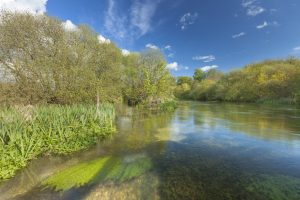
The South Downs is internationally-renowned for its quintessentially English countryside, pretty chocolate-box villages, flower-rich chalk grasslands and stunning white cliffs.
Perhaps less known are the network of rivers and streams that crisscross this amazing landscape – yet they really are the beating heart of a complex ecosystem that relies on flowing freshwater!
There are seven main rivers that run through the National Park – the Ouse, Cuckmere, Adur, Arun, Rother, Meon, and Itchen – and, while there are lots of similarities, each have their own unique ecology and biodiversity.
Why are rivers are important?
The National Park’s rivers and all their tributaries are life-giving arteries, supporting an incredible variety of plant, fish, bird, amphibian and insect species.
For this very reason river health is a key priority of the National Park Authority, which has been working for many years with landowners, farmers, key stakeholders and visitors to encourage good river management and reduce polluting run-off in order to help nature thrive.
Carry out a survey and you’ll be amazed what you can find, in particular the sheer breadth of species diversity. Kingfisher, otter, wigeon, water vole, bullhead, lapwing, eel, brown trout, and the endangered white-clawed crayfish, to name but a few, and that’s before you’ve started looking at the scores of insect species.

These rivers are among the richest freshwater ecosystems in the UK and the picturesque river valleys are an integral part of the landscape and local communities. Hydrological systems are ultimately all connected, so healthy rivers and streams means healthy soils, better crops, healthy trees, more biodiversity, cleaner drinking water and healthier seas and oceans. The National Park provides drinking water to over 2m people along the south coast, so it’s in everyone’s interest that our waterways are in good condition.
While the biodiversity today might seem impressive, step back 100 years and our rivers would have been buzzing with much more life. Across the UK, over three quarters of rivers fail to meet the required standards for river health and climate change is putting even more pressure on these delicate freshwater habitats. In some cases, biodiversity is merely surviving, rather than thriving, and that’s why rivers really do need our help.
What you can do
Community action has a big part to play. There are a number of community groups that are focused on helping our rivers. One very inspiring group is “Love Our Ouse”, an exciting community-based initiative to link people to celebrate, raise the profile of and upscale positive action for the Ouse from source to sea.
Love our Ouse is about being inclusive and connecting all sorts of people; residents, community groups, recreational users, landowners, farmers and everything in between! Why not get involved?! Check out https://loveourouse.org to find out more.
There are a number of brilliant charities and groups working to help protect and enhance rivers and they often have volunteering opportunities and local events. Here’s just a few of them:
- Ouse and Adur Rivers Trust
- Western Sussex Rivers Trust
- Friends of the Cuckmere
- Friends of the Ems
- Meon Valley Partnership
- Friends of the Itchen Estuary
Helpful resources