
South Downs Spotlight: Our fabulous fungi and the law
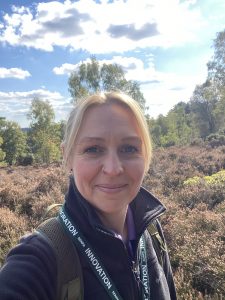 Meet Kirsty Murray, who is Assistant Engagement Ranger for Heathlands Reunited SAMM Project, which is helping to protect a vast swathe of heathland in the west of the National Park in East Hampshire. Here Kirsty takes a deepdive into the world of fungi and looks at the rules around foraging for these amazing phenomenon of nature.
Fungi really are fabulous! They are a fundamental part of the earth’s ecosystem, breaking dead matter down and returning nutrients into the soil to nourish all sorts of living organisms. They come in all shapes and sizes: moulds, rusts, brackets, jellies and mushrooms; the list goes on, and can be found on the ground, on tree stumps, or on trunks and branches. Once you get searching it’s a proper treasure hunt! Now that we’ve had some rain and cooler weather, it’s the perfect time to get out and explore some of the fascinating fungi on our local heaths.
There are some brilliant species of fungi putting on a show for us this autumn and winter. Some of our favourite species are:
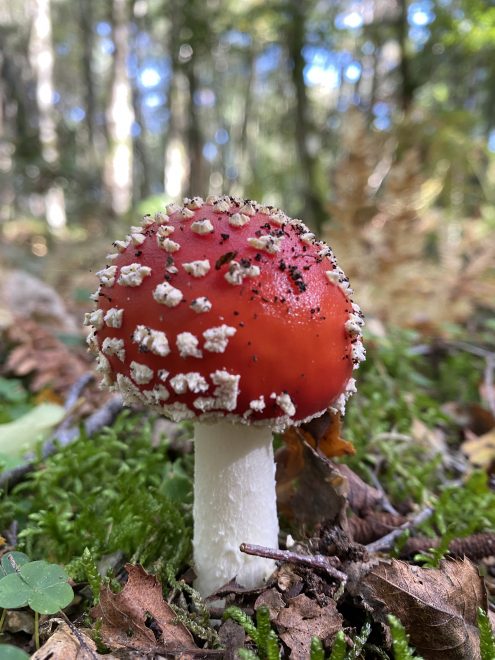
Fly Agaric (Amanita muscaria)
The classic fairytale mushroom, shrouded in folklore, is one of our most recognisable UK fungi species. It’s one you’re bound to see in the area as it favours birch and pine woodland and is easy to spot with its bright red cap and white dots which serve as a warning as it’s highly toxic.
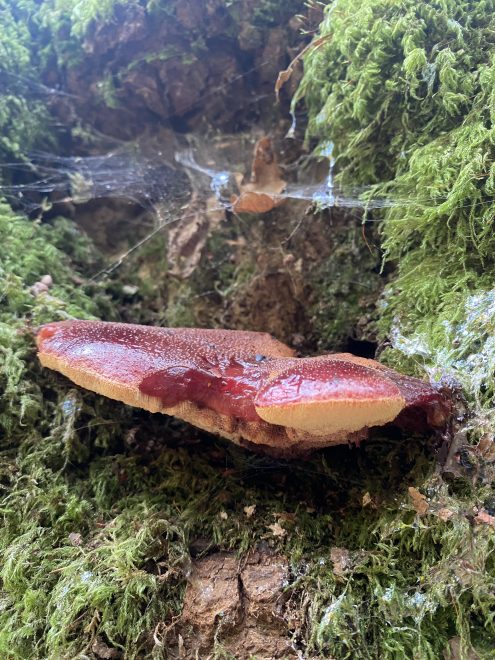
Beefsteak Fungus (Fistulina Hepatica)
The beefsteak or tongue fungus is a bracket fungus often found in broadleaved woodland, attached to the trunk of deciduous trees, usually oak. It’s a red colour and beefsteak comes from the fact it resembles a cut of raw meat as it ages and oozes a red blood like substance when squeezed. Beefsteak fungus is common in late summer and autumn.
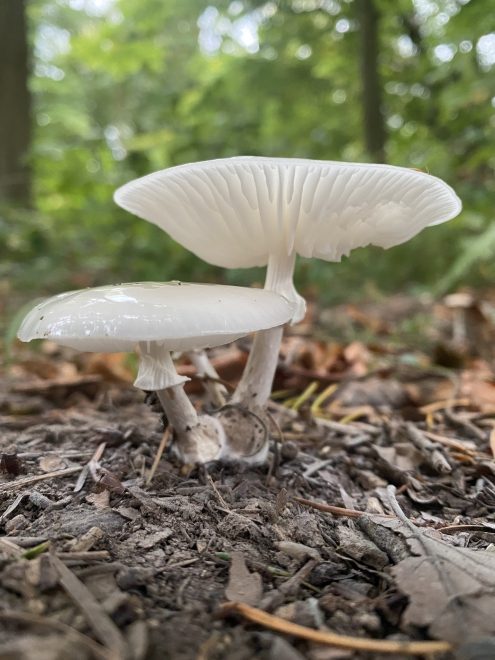
Porcelain Fungus (Oudemansiella mucida)
These beautiful cream-coloured translucent fungi are eye catching, especially after a rain shower when their caps are shiny and slimy. Typically found on Beech stumps, logs and sometimes in clusters on tall tree trunks. The underside of the cap reveals delicate gills and makes a great photo! Porcelain fungus can be found from late summer to early winter.
The lowland heath of the Wealden Heath special protection area provides a mixture of woodland and open heaths which support a huge variety of fungi, many of which are protected under various UK environmental laws.
We are lucky to have many SSSI (Site of Special Scientific Interest) sites in the surrounding area, which are home to some very rare species. This means that only those with special permission to collect fungi for survey and recording purposes may pick them and please note that it’s illegal to pick protected species and forage anything without consent on a SSSI under the Wildlife and countryside Act 1981.
It’s worth explaining the particulars of the legislation. Section 13 of the Wildlife and Countryside Act 1981 makes it an offence to pick, uproot or destroy any wild plant listed in Schedule 8 of the Act. This list includes some species of fungi. The Act also makes it an offence for a person to sell, offer for sale, have in their possession or transport for the purpose sale, any live or dead wild plant. Publishing advertisements for the purchase or sale of Schedule 8 wild plants is also an offence under the Act.
Section 55 of the Natural Environment and Rural Communities Act 2006 makes further amendments to the 1981 Act and makes it an offence to intentionally or recklessly destroy or damage any flora, fauna, geological or physiographical feature of a Site of Special Scientific Interest (SSSI) if that feature forms part of the SSSI designation. A person found guilty of this offence on conviction is liable to a fine of up to £2,500.
Section 4(3) of the Theft Act makes it offence for a person to pick mushrooms, flowers, fruit or foliage growing wild on any land that they do not own if it is done for commercial purposes.
Many of our UK fungi are toxic to humans, so please do not attempt to forage or eat any unless you are with an expert and have the correct permission.
The great thing about fungi is they’re easy to photograph even on your smartphone as they don’t fly off! It’s actually quite a mindful activity to have a go at, slow down and look at the forest floor and this fascinating kingdom beneath our feet and among the trees.