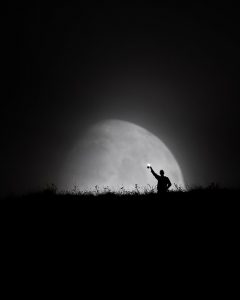

Dark Skies for Our Wellbeing
One study published in February 2024 found that people with a greater connection to the night sky had better mental health and felt happier.
Recent research has shown that Dark Skies and darkness are enormously important for human health and well-being. From paying attention to our circadian rhythms, written about in Lynne Peeples’ recent book The Inner Clock, to the impact of blue light late at night on our sleep cycles, to overall mental health (see, for example, the work of the International Astronomical Union’s Office for Astronomy for Development, Flagship Project 2), darkness, dark skies and light pollution affect us all.
A great introduction to this topic is DarkSky International’s article Darkness for Wellbeing
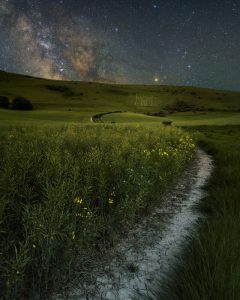
The University of Derby Nature Connectedness Research Group is also working on night sky connectedness through the work of Dr Christopher Barnes. Elinor spoke with him in Episode 4 of the first season of the Embrace the Darkness podcast, learning about the five pathways to nature connectedness and how we can use them to embrace the darkness: using all your senses, finding meaning in the darkness and night sky, exploring emotions such as awe and wonder, feeling compassion for self and others around light pollution and experiencing the beauty of clear and dark skies.
Dark Skies are also an important part of global cultural heritage, both past and present. They connect us to those who have come before and to cultures around the world. Here in the UK there are many sites, such as Stonehenge, which connect the landscape to the movements of the Sun, Moon, planets and stars. Humans share a fascination with the cosmos – we are all made of stardust after all!
We will update this page regularly with more research and ideas, so do check back often!