
Birds at Night
Nocturnal bird species have clever adaptations suited to being active at night. Typically, they have large, black eyes that allow lots of light in but they often make use of their other senses too. Owls have ‘facial discs’ that filter sound to their ears so accurately, they can then pinpoint the exact location of their prey.
Read on to meet some of the National Park’s star night-time species!
Tawny Owl
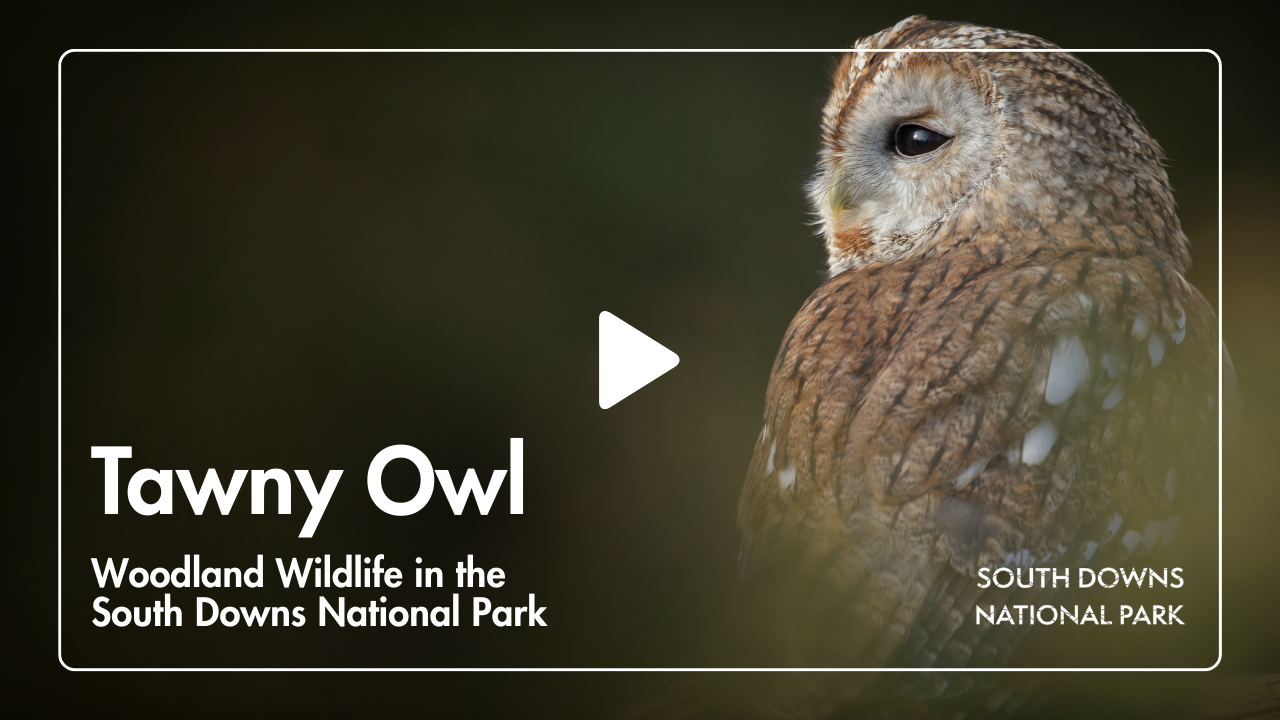
This is the most common species of owl in the UK. Have you ever been tucked up in your bed after dark and heard a tawny owl calling ‘twit twoo’? Well, that classic call doesn’t come from just one tawny; it is the female calling out ‘twit’ to the male, and him replying with ‘twoo’!
They are most commonly found in woodland habitats where they spend the day sleeping in a tree. You’re more likely to hear them than see them at night so keep an ear out for that iconic call as the sun sets.
Barn Owl

With its heart-shaped face, ghostly white feathers and ability to fly silently, it’s easy to see why the barn owl has a spooky reputation! Their name comes from English folklore which believed they could keep evil spirits away,
This species is often seen flying low across fields at dusk and if you’re in the car, you might even see one swoop infront of you.
Does the barn owl hoot or screech? Listen to this clip to find out!
Nightjar
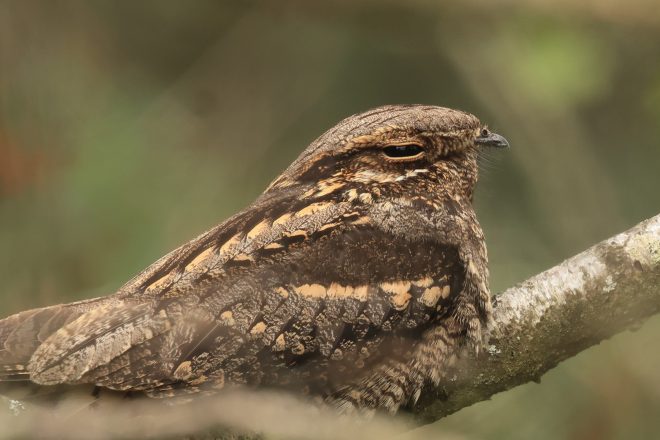
Perhaps one of the strangest nocturnal birds in the National Park, the nightjar is a heathland specialist with excellent camouflage abilities and a rather eerie call. They are a ground-nesting species, and their mottled brown and grey feathers help them to blend into their surroundings while sat on eggs, but this does make them very vulnerable to trampling and disturbance.
Top Tip: help protect nightjars by sticking to paths and keeping your dog on a lead during breeding season (between March and September.)
Listen to the nightjar’s eerie ‘churring’ You have to hear it to believe it!
Nightingale

Understated but pretty in a subtle way, the nightingale is all about the voice! This bird is about the size of a robin but its powerful song is completely unique and unmistakeable. During dawn & dusk from April to early June, male nightingales perform a series of clicks, whistles and croaks to attract females and hold their territories. Their song has inspired music, stories and poetry across centuries; a truly special songster.
Top tip: Visit RSPB Pulborough Brooks during April and May to experience the nightingale song in the National Park.