
 The National Park’s very own “Queen of Darkness” Elinor Newman looks at what’s coming up in our Dark Skies as the nights draw in!
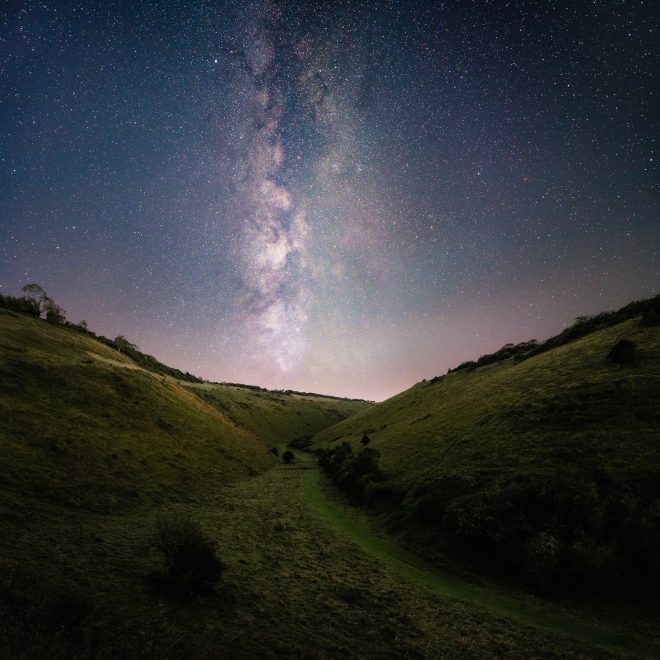
As the year turns towards the autumn equinox and the nights lengthen, the darkness returns (pause for dramatic music) and thoughts turn towards all things Dark Skies.
There are a few events that may be of interest:
- 16 September, Bats and Biofluorescence Walk at Iping/Stedham Common with Ranger Jake Barnes and Queen of Darkness Elinor, 7-9pm.
- 25 September, Sunset Bat Safari at Shortheath Common with the HeRe SAMM team, 7-9pm.
- 28 October, Things that Glow bright at night: Biofluorescence night walk at Weavers Down with the HeRe SAMM team, 5.30-6.30pm.
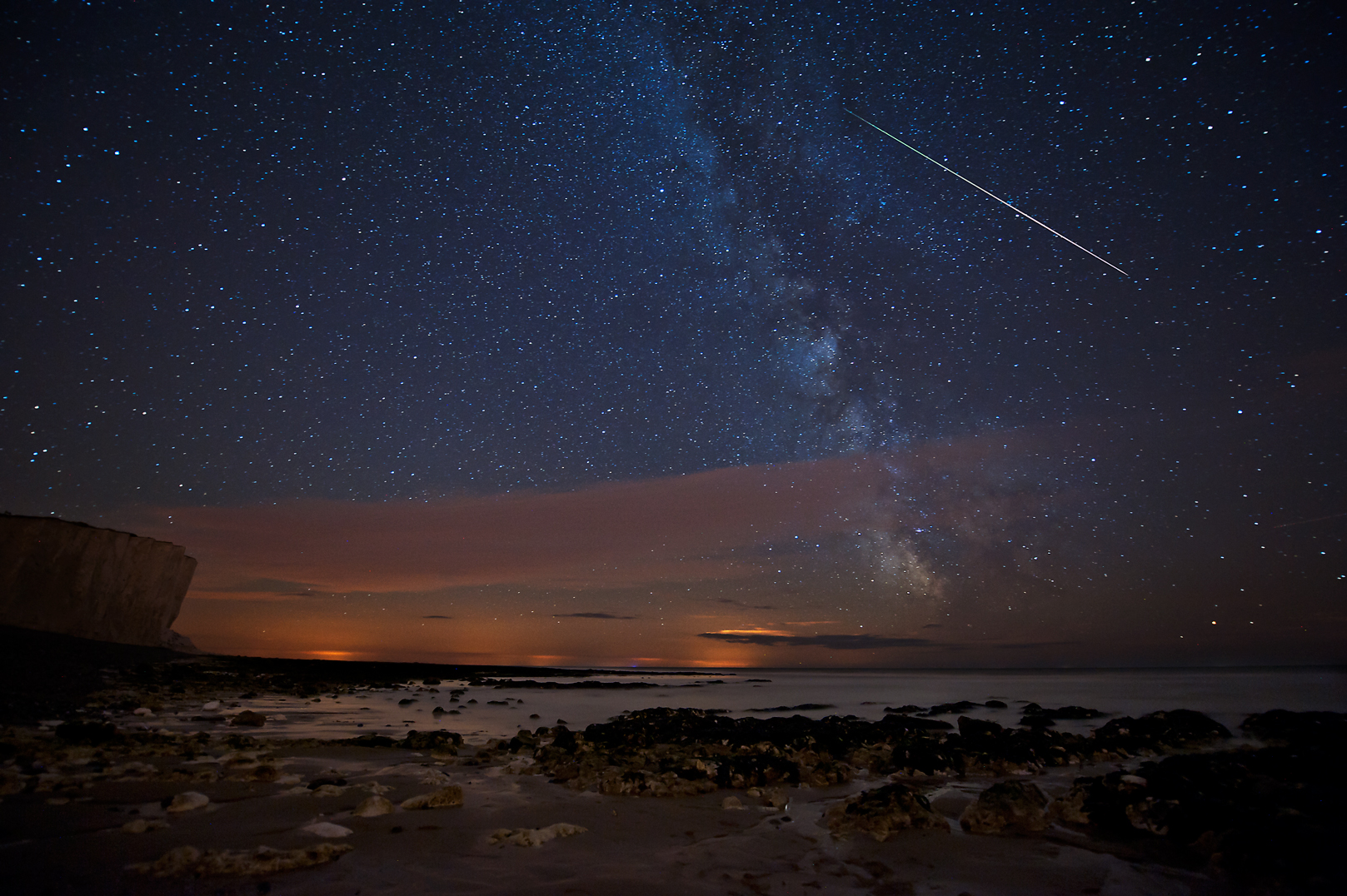
We have some great possibilities for meteor showers coming up over the autumn, and a (hopefully) spectacular lunar eclipse:
- Monday 22 September – Autumn Equinox. The time of the year when day and night are equal.
- Tuesday 7 October – Full Moon (Hunter’s Moon)
- Wednesday 22 October – Meteor Shower: Orionids. These peak around this date but have quite a broad peak so any clear nights around this date should be good. These meteors come from Halley’s Comet.
- Wednesday 5 November – Full Moon (Beaver Moon), supermoon – full moon occurs close to perigee so the moon looks bigger and brighter than normal full moons.
- Thursday 4 December – Full Moon (Cold Moon), supermoon.
- Sunday 14 December – Meteor Shower: Geminids. These peak on 14 December, often one of the best meteor showers to view.
- Sunday 21 December – Winter Solstice. The Sun reaches its most southerly sunrise/set and is at its lowest point in the sky. The longest night and the shortest day.
Details of our 10th anniversary as an International Dark Sky Reserve are coming together and we look forward to announcing celebrations in the near future. In the meantime, put 12-22 February 2026 in your diary for the 2026 Dark Skies Festival!