
An extraordinary fungal discovery has been made in the South Downs National Park.
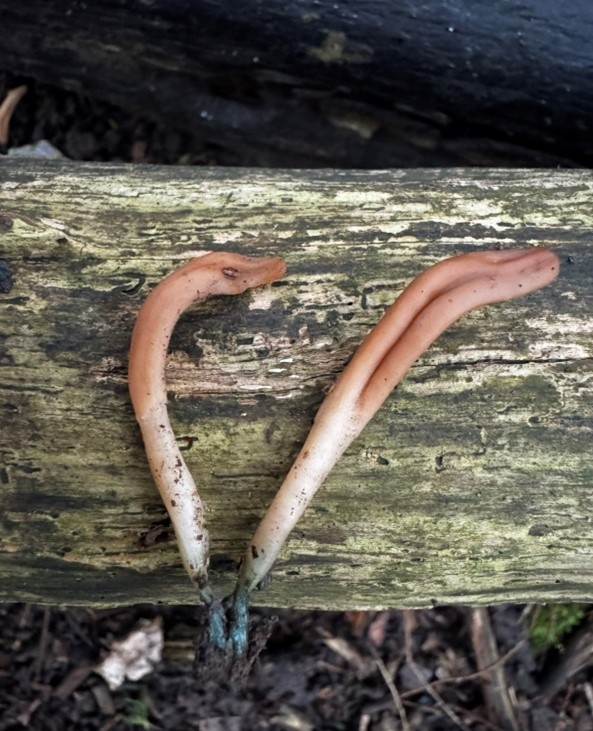
Amateur fungi enthusiast Liz Frost was stunned after spotting a tiny, tongue-shaped fungus that turned out to the first-ever UK sighting of Microglossum cyanobasis, the Blue-Based Earthtongue, and only the second ever recorded in Europe.
The species was spotted at Kingley Vale National Nature Reserve.
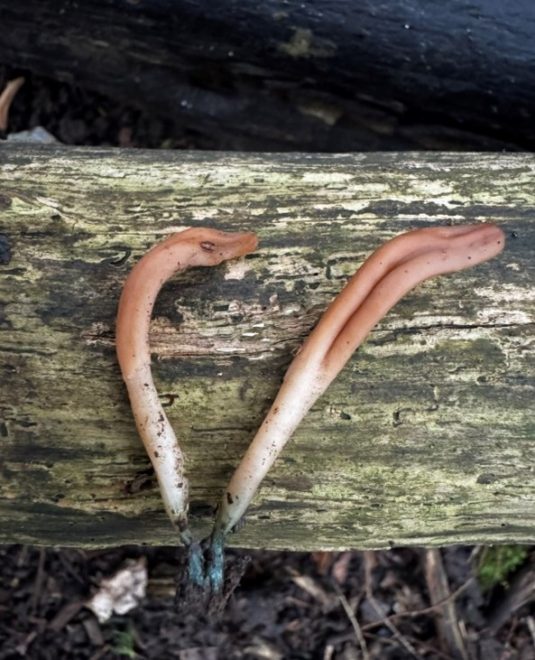
Microglossum cyanobasis belongs to a fascinating group of fungi commonly called Earthtongues. These little organisms look just like their name suggests – small tongues emerging from the earth.
The really unusual aspect of this species is base of the stem, which has a distinctive cyan-bluish tinge. This is where its name comes from – ‘cyanobasis’ meaning blue base.
Liz said: “I stumbled upon something extraordinary – a tiny, tongue-shaped fungus poking up through the moss and leaf litter.
“On my first visit, I found six individuals growing closely together amongst yews, oaks and mossy soil.
“Excitement got the better of me and I returned the very next day, discovering another twelve nearby. They’re incredibly easy to miss – small and well camouflaged amongst the woodland floor – which might explain why they’ve gone unnoticed until now.”
Rachel Guy, Reserve Manager, added: “It was a great day when I heard from Liz about her discovery.
“As an indicator of high-quality habitats, this find highlights the value of National Nature Reserves and the hard work by everyone to look after these special places for nature.”
Kingley Vale is a very sensitive site in the National Park. Please help care for this special place by leaving no trace and respecting the precious wildlife there.