

Anooshka Rawden, Cultural Heritage Lead for the National Park, delves into the history of a Saxon cemetery buried for many centuries in the chalk hills until its excavation 40 years ago.
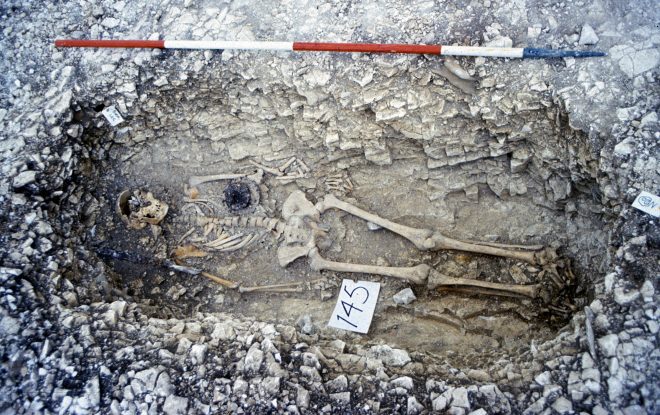
 Apple Down stands among the most significant Saxon period discoveries in England. Its excavation in the 1980s revealed a cemetery featuring mixed burial rites and rich grave goods, revealing the compelling and human story of the early medieval period in Britain.
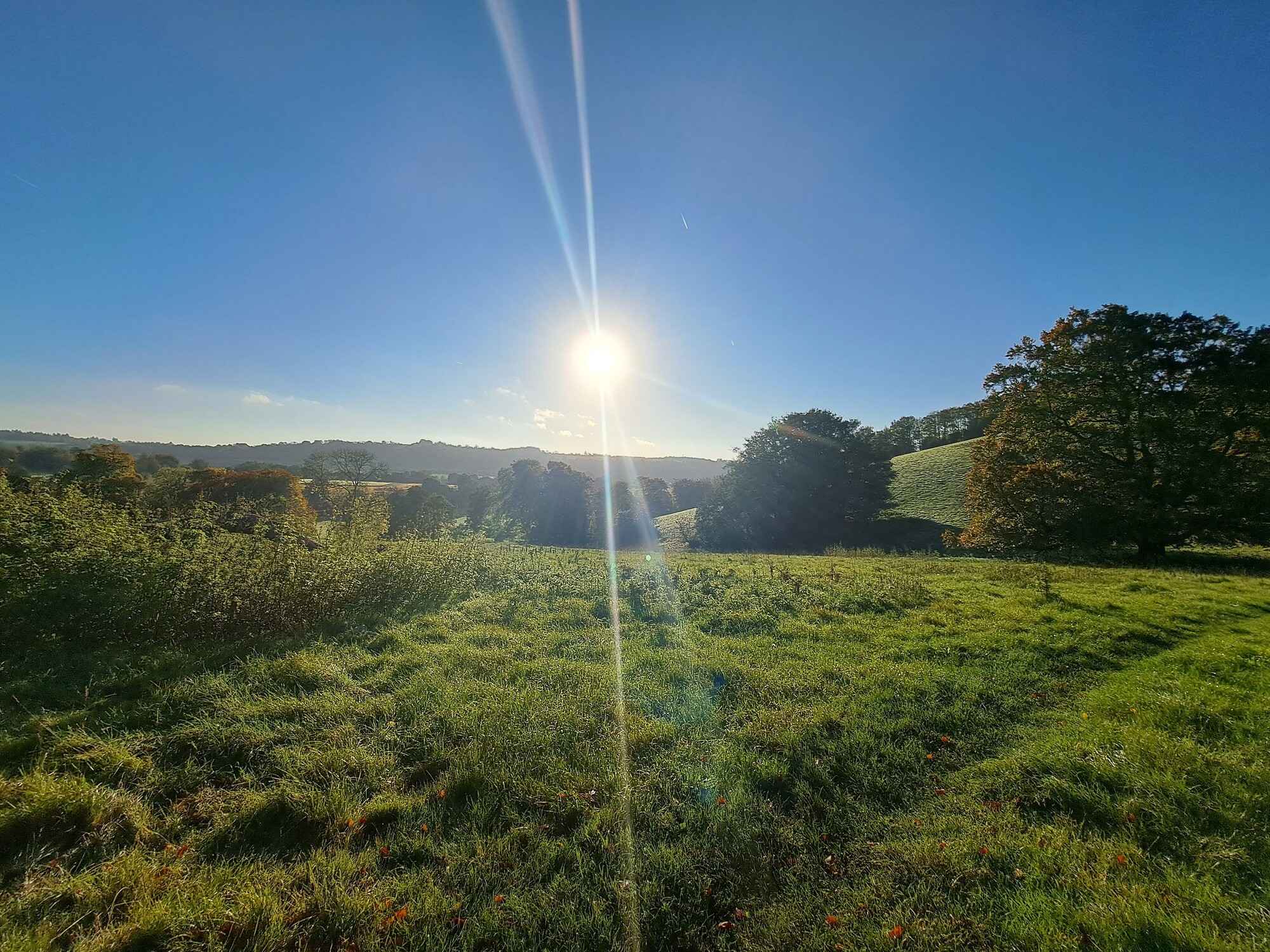
Apple Down sits in the parish of Compton, with the wider landscape dissected by dry valleys and a patchwork of pasture, arable and woodland. The earliest burials at Apple Down date from the late 5th and early 6th centuries. The official withdrawal from Britain by the Romans is associated with the AD410 letter of the emperor Honorius telling the British people to look to defend themselves. Some of the earliest graves at Apple Down may be from as early as AD490, so Apple Down represents a transition – between the end of the Roman world and the beginnings of a new one.
Apple Down was the resting place of men, women and children and the original excavation team estimated that at least 253 individuals were buried there, giving a snapshot of a community bridging the transition from the post-Roman to early Medieval world over a period of around 200 years.
We know from the archaeological excavation that some of the graves would have been covered with earth mounds, or marked by an upright post. A number also evidently had roofed timber structures around them, forming houses for the dead that sheltered mourners and the grave itself, and marking the plot as a home for the departed. There is also some evidence for bodies having been buried in graves that were left open for a time after deposition, as insect larvae were discovered behind brooches, which suggests bodies open to decomposition before having been covered over. This may have given time for the completion f burial rites, and the time needed by the living in mourning the dead.
The archaeological finds from Apple Down include the beautiful and unusual. From amber beads with their origins in the Baltic, swords from Scandinavia, Germanic brooches, Roman coins that had been pierced and worn possibly as amulets (with unpierced Roman coins discovered in Saxon graves possibly reflecting a continued belief in payment to Charon to cross the river of the dead), ivory rings which had been part of bags. Some graves included personal care sets, such as tweezers, files and sheers and decorated combs.
Apple Down is also full of stories. Each object placed in a grave tells a story of both society and the individual. Examples include research in 2011 that has suggested burial 152, a young man aged around 20-25 with the accoutrements of a warrior – shield, spear, knife – died of venereal syphilis. The disease had resulted in wasted limbs meaning the young man had probably required care for periods of his life, provided by the community, before the disease may have taken his life. Care is a thread through many stories at Apple Down, including that of burial 120, a woman who (possibly as a result of a severe ear infection) had a large cavity in the bone behind her ear, destroying the mastoid process (the bony projection behind the ears) and which likely caused severe pain, headaches, hearing loss and fatigue, while burial 60 was a young person aged 15-17 years who was possibly paralysed. Each graves tells a story of care, in this life, and in readiness for the next.
The remains of individuals buried at Apple Down are cared for by The Novium Museum at the Collections Discovery Centre, Fishbourne Roman Palace. They continue to add value to our understanding of settlement in Britain. In 2022, new genetic research, which included samples from Apple Down, concluded that around three quarters of the early Medieval population in eastern England was comprised of migrants with DNA links to the continent, and that rather than the assumption that the majority would be men, these immigrants were families. New settlers melded with the existing local post-Roman populations, with integration occurring to varying degrees and timescales – at Apple Down, almost 50% of those buried had continental ancestry, with distinctly different burial styles in terms of orientation, location and artefacts based on whether individuals were from the post-Roman existing population or from the continent, which might suggest a longer lasting social separation but also possibly the retention of core beliefs and rites.
The significance of the downland landscape in connecting communities of the living and dead cannot be underestimated. They enabled people to continue to commune with those lost – burial mounds, houses for the dead, posts and other markers which may have left no traces in the archaeology, created focal point within a downland that sustained communities in life, and which held them in death.