
South Downs Dark Skies 10th Anniversary: Turn out that light!

Vicki Wells is a former producer on BBC Sky At Night and is passionate about the dark skies of the South Downs. Now cabinet member for environment at Worthing Borough Council and a National Park Authority Member, she writes about how simple steps can help protect the dark skies and benefit nature.
During daylight hours, the South Downs National Park is a great place to explore nature with its mosaic of habitats including chalk grassland, lowland heath, ancient woodlands, river valleys and coastal chalk cliffs.
At night, our fantastic national park serves a dual function. Not only is it home to a variety of nocturnal wildlife including mammals and bats, amphibians including toads, insects, moths and owls – it is also a fantastic place to spot planets, enjoy meteor showers and join the dot to dot of stars that reveal our northern hemisphere constellations.
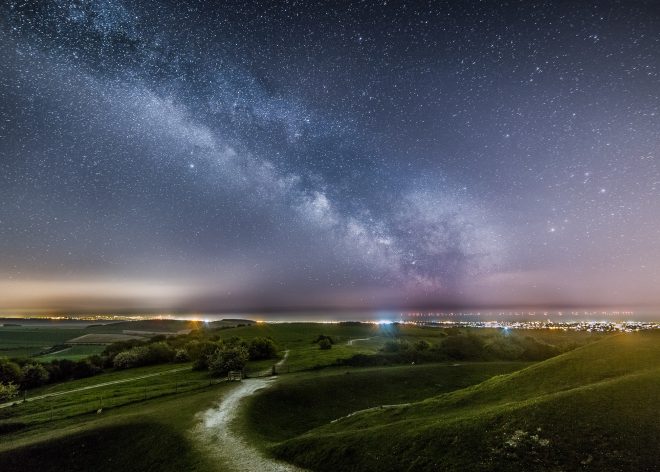
International Dark Sky Reserves like the South Downs work to maintain pristine night skies and the UK boasts six IDSRs as part of a network of 25 across the planet.
A truly dark sky allows you to see far-off stars and galaxies in the same way our ancestors did. Unimpeded by the glow of street lights or bright artificial lighting, you can see amazing celestial objects with your naked eye. The arms of the Milky Way, the Andromeda galaxy and the plethora of stars that infill the gaps, helping complete the ancient outlines of the constellations are revealed when it’s properly dark.
Orion, the Hunter, is one of the most recognisable northern hemisphere constellations. In Greek mythology, Orion was a mighty hunter and the son of the god of the sea, Poseidon. Not so mighty as it turned out, dying from a scorpion sting, having boasted that he could hunt and kill every animal on Earth. Nevertheless, Zeus placed him, not unlike a hunting trophy – among the stars forever.
Orion is best known and identified by its diagonal, ‘belt’ of stars, but one of the ‘three’ stars is actually five stars in a complex star system. The constellation also contains two of the night sky’s brightest stars, Betelgeuse and Rigel.
Betelgeuse, Orion’s right shoulder is a giant, red star, about 10 million years old (our Sun is nearly 5 billion-years-old). Rigel – the brightest in the constellation, is Orion’s left knee.
In a very dark location, you can also spot the Orion Nebula with the naked eye. A nebula is an intense star-forming region of gas and dust. It looks like a smudge of fuzzy light but in reality, the Orion Nebula is 24-light-years-wide and 1,350 light-years away from Earth. Find it in Orion’s sword, directly below the belt!
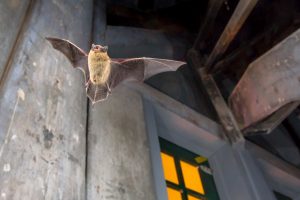
Dark sky reserves are vital for wildlife. The word “nocturnal” comes from the Latin word nox, which means night, and the conservation of darkness is more important than ever for nocturnal animals which depend on it.
Artificial light is fatal for insects, drawn into harm’s way and impacting populations. Anything reducing insects at this time of biodiversity crisis, contributes to fewer pollinators for plants and less food for humans, birds and bats.
Migratory birds navigate by moonlight and starlight. Towns or cities with brightly lit towers and buildings disrupt seasonal cues, forcing birds to migrate too early or too late, throwing off nesting and foraging activity which is vital for their survival.
The good news is that light pollution is instantly reversible and we can all do our bit in a very small but helpful way to safeguard dark skies. Every time a light is shielded, pointed downwards, or switched off when it’s not needed, we support wildlife by helping provide and maintain the darkness they depend on to thrive and survive. By protecting ‘darkness’ we help protect and conserve the biodiversity of our nocturnal ecosystems.
With so much to see and hear in a truly dark outside space, time spent looking up at the night sky is a fantastic way to slow down and reconnect with nature. Wrap up warm and head to any of the ten Dark Sky Discovery Sites within the South Downs National Park, and soak up the stunning star-filled skies!
Help dark skies, save energy and support nature
- Outside lights/fairy lights – shield lights, use timers or sensors so they aren’t on all night.
- Close your curtains at night – this stops light escaping and keeps your home warm too!
- Choose softer, warmer light bulbs – they are better for nature and still keep your home bright.